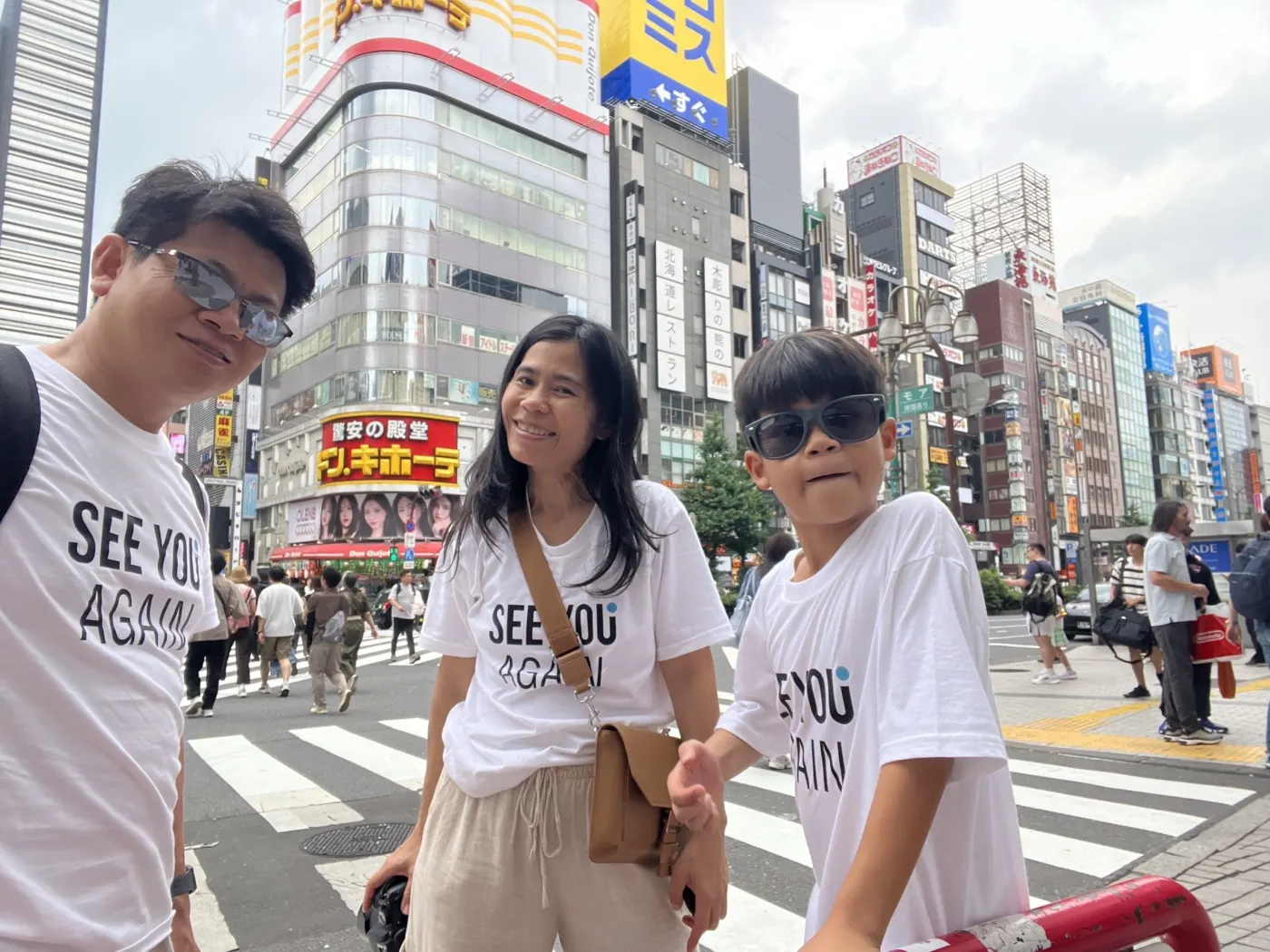
Thai travelers who enter Japan visa-free are allowed to stay for 15 days. If you have to stay more than 15 days in Japan because your flight was canceled or you fell ill, keep the evidence from the airline or hospital, then report to the immigration office at the airport on the day you actually leave. If it's your own mistake, such as miscounting the days, you need to turn yourself in at an immigration office in the city before your flight date. Don't wait to explain at the airport.
Below, everything is laid out in the order it usually happens during a trip to Japan, from checking the date in your passport and the times flights are most often canceled to the Japanese phrases to use with officials.
Check Your Deadline on the Passport Sticker Before Leaving the Arrival Airport
When you pass through arrival immigration at Narita, Haneda, Kansai or another airport, the officer puts a Landing Permission sticker in your passport. The field to look at is Until, the last day you're allowed to stay in Japan. Take a photo of this page and keep it on your phone from day one.
The day your plane lands in Japan counts as day 1. For example, if you land in Tokyo on 3 March, your last day is 17 March, and you must clear departure immigration by that day. The time that counts is Japan time, which is 2 hours ahead of Thailand. People who book a late flight after midnight while thinking in Thai time often slip up here.
If your itinerary runs close to 15 days, for example Tokyo and Kawaguchiko, then on to Kyoto and Osaka before flying home from Kansai, book your return flight at least 1 day before your deadline. That way, if your flight is pushed back overnight, you still have a day to sort things out.
When Flights Out of Japan Are Most Often Canceled
- August to October is typhoon season, and Okinawa, Kyushu and the Kansai side are often hit. Kansai Airport sits on an island in the sea, and in very strong winds the bridge and trains to the airport may stop, so even if your flight isn't canceled, you may not be able to reach the airport.
- From December to February, heavy snow in Hokkaido closes the runways at New Chitose Airport on and off, and domestic connecting flights to Tokyo or Osaka are canceled as a result.
- During Golden Week, from late April to early May, and Obon in mid-August, flights aren't canceled more often than usual, but if yours is, seats on a new flight are very hard to find and you may have to wait several days.
If you're traveling to Japan during these periods, check the Japan Meteorological Agency (JMA) forecast 2 to 3 days before your flight, and turn on notifications in your airline's app.
Flight Canceled: Documents to Request from the Airline Right Away
What Japanese immigration wants is evidence that you intended to leave on your original date but something beyond your control happened. At the airline counter, ask for a flight cancellation certificate, called 欠航証明書 (kekko shomeisho) in Japanese. If your flight is delayed, ask for a 遅延証明書 (chien shomeisho). Some airlines let you download it from their website, but a printed copy with the airline's stamp is easier to use with immigration.
Keep everything together in one envelope:
- The ticket or e-ticket for your original flight, and your boarding pass if you already have one
- The email or SMS from the airline notifying you of the cancellation
- The ticket for your new flight after rebooking
- The flight cancellation or delay certificate
If your new flight is still on or before your Until date, there's nothing more to do; just go through departure immigration as normal. The steps below apply only if your actual departure date is after your Until date.
Lowest one-way fare found by searchers each month; real prices change by date
Data and links by Aviasales (partner) · we may earn a small commission when you book, your price stays the same
On Your Actual Departure Day: The Revenue Stamp and the Airport Immigration Office
Get to the airport earlier than usual, allowing at least 3 to 4 hours, because checking the documents takes time and you sometimes have to wait for the officer who handles these cases.
- Buy a Japanese revenue stamp, 収入印紙 (shunyu inshi), at the post office in the terminal. Our original source puts it at around 10,000 yen, but the actual fee depends on the type of application and may change, so ask an immigration officer or the post office for the amount before you pay. Airport post offices have closing times, so if you're flying very early or late at night, check the hours in advance.
- Check in and drop your bags as usual, then go through security screening.
- After security, don't join the passport control line. Look for the Immigration Office, which is usually beside the departure immigration area. If you can't find it, hand your passport and envelope of documents to the officer at the front of the line and explain that you've overstayed because your flight was canceled. The officer will take you there.
- Fill in the explanation form the officer gives you, attach the revenue stamp, and answer questions briefly and directly, based on your evidence.
- When everything is done, the officer will take you to get your departure stamp. Some airports let you through a special lane.
Take photos of every document, including the revenue stamp once it's attached, and keep them on your phone. Next time you enter Japan, if immigration asks about this record, you can show them right away.
Too Sick or Injured to Fly During Your Trip to Japan
Ask the Japanese hospital for a medical certificate, 診断書 (shindansho) in Japanese, and ask the doctor to write until what date you shouldn't travel by air. This certificate has a fee separate from your treatment costs, so keep the receipt for your insurance claim.
If you know before your Until date that you won't make it home in time, for example because you're in the hospital, have a relative or travel companion contact the immigration office in that city before the deadline to ask about extending your period of stay. Getting in touch before the deadline is always better than explaining afterward.
Miscounted the Days or Forgot Your Return Date: Turn Yourself In at an Immigration Office in the City
In this case, there's no circumstance beyond your control to explain it. If you just show up at the airport, or the police check your passport along the way, it's treated as an illegal overstay. Penalties include fines, detention and a ban on entering Japan for 5 to 10 years.
What you should do is turn yourself in under the Departure Order system (出国命令 shukkoku meirei). If you meet the conditions, you'll be banned from entering Japan for 1 year and won't be detained. The main conditions are that you come forward voluntarily, intend to leave the country promptly, have no criminal record, and have never been deported or received an order like this before.
Regional immigration bureaus that Thai travelers are usually near:
- Tokyo: the main bureau is in Konan, Minato, near Shinagawa Station
- Osaka: in the Cosmo Square area of Suminoe, which also serves people visiting Kyoto, Nara and Kobe
- Nagoya, Fukuoka, Sapporo, Sendai, Hiroshima and Takamatsu each have their own bureau
What to bring:
- Your original passport
- A return flight ticket with a clear date, allowing about 1 to 2 weeks for immigration to process the paperwork (you can ask the officer before booking)
- 1 to 2 passport-style photos, 3x4 cm
- Enough cash for accommodation and meals while you wait
The officer will interview you, check your record and then issue a departure order document. On your flight day, show this document at departure immigration, and you must leave on the date stated in it.
Japanese Phrases to Use with Officials
Most immigration officers at airports speak English, but staff at city offices or post offices may not be fluent. You can show them these phrases on your phone.
- 欠航のため、在留期限を過ぎてしまいました。 My flight was canceled, so I have stayed past my permitted period of stay.
- 欠航証明書をください。 Please give me a flight cancellation certificate.
- 収入印紙を買いたいです。 I would like to buy a revenue stamp.
- 出国命令の手続きをしたいです。 I would like to apply for a Departure Order.
- 入管事務所はどこですか。 Where is the immigration office?
Follow-On Costs and Travel Insurance
Besides the revenue stamp, there are extra hotel nights, the train or taxi back into the city if the airport closes, and ticket change fees if the airline doesn't cover them. During typhoons, hotels near Kansai and Narita airports fill up fast, so book as soon as you know your flight is canceled.
Many travel insurance plans pay for accommodation and meals when a flight is delayed or canceled for longer than a set number of hours. Read the terms before you travel, and keep every receipt and airline certificate, because insurers ask for the same set of documents as immigration.
Travel Japan Privately with See You Again
If you'd like someone to help plan your flight dates with a buffer day and take care of transport and accommodation when plans change, take a look at private Japan routes with See You Again, such as Tokyo and Hakone, 6 days 5 nights or Osaka, Nara and Kobe, 5 days 4 nights. Prices are available on request based on your travel dates.
Chat with us on the website or on LINE 004207289999999, or call 083 035 9755.