To visit the Fuji Five Lakes in shibazakura season, aim for early to mid-May and arrive at the Fuji Shibazakura Festival beside Lake Motosu (Motosuko) when the gates open at 8 a.m. That gives you pink moss in full bloom across the slopes and the best chance of seeing Mt. Fuji without clouds in the way. This article covers how to plan your days in the Fuji area, getting around in Japan, budgeting and what to know before you leave Tokyo.
Photo: t.kunikuni / Wikimedia Commons (CC BY-SA 2.0)
What Is Shibazakura, and Why Do the Japanese Wait for This Season?
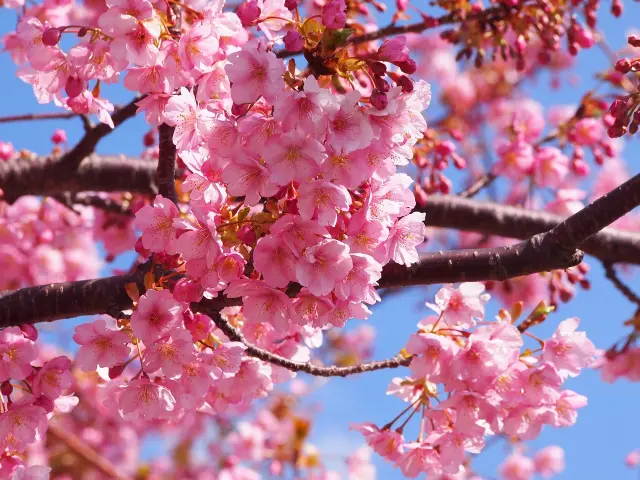
Shibazakura (芝桜) literally means "lawn cherry blossom". It is a small-flowered ground cover known in English as moss phlox or pink moss. Its five-petaled flowers look like miniature cherry blossoms, and when planted densely in large beds they form a carpet of color that covers the ground so completely you cannot see the soil at all.
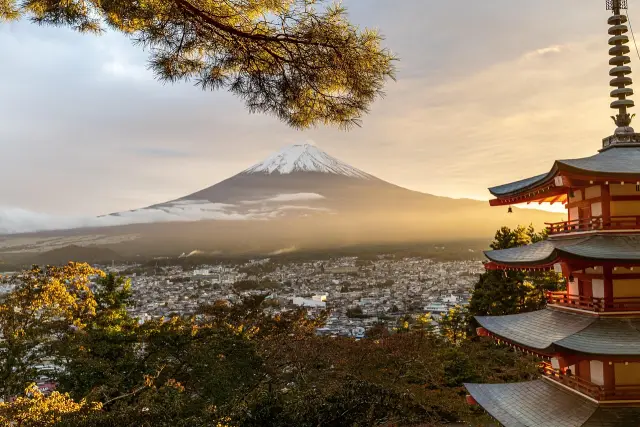
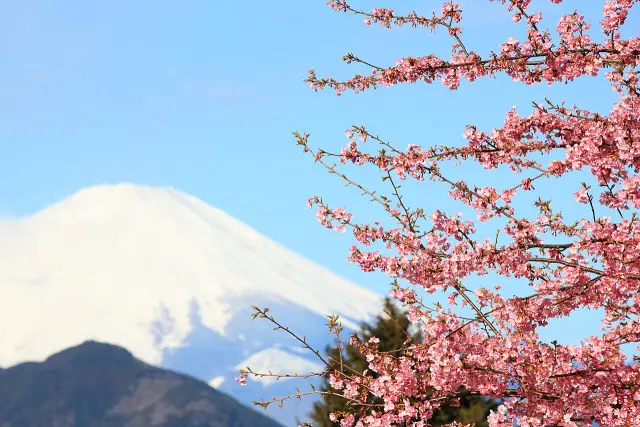
At Fuji Motosuko Resort, on the north side of Mt. Fuji, hundreds of thousands of plants have been planted in 7 varieties, ranging from deep pink and pale pink to white and lavender purple, arranged in curving bands along the slopes. From higher ground the patterns stand out clearly, with snow-capped Fuji directly behind, because the festival grounds face the mountain.
For visitors to Japan in late spring, this festival is like a consolation prize after the cherry blossoms have fallen in Tokyo. Because it sits at about 1,000 meters above sea level, the flowers bloom several weeks later than in the city.
When and Which Days to Go for the Best Experience
- Festival period: Every year from around mid-April to late May. The exact dates are announced on the festival's official website early in the year.
- Peak bloom: Usually around early to mid-May, but it can shift with that year's weather. In years when the cold lingers, the flowers bloom later.
- Avoid Golden Week: Late April to early May is a long holiday period in Japan, with heavy traffic on the roads around the lakes and full buses. If you can choose, a weekday after May 6-7 is much more relaxed.
- Opening hours: 08:00 - 16:00. In the morning the light comes in from the side, perfect for photos with Fuji, and clouds often drift up to cover the summit after 10 a.m.
Getting to Lake Motosu Within Japan
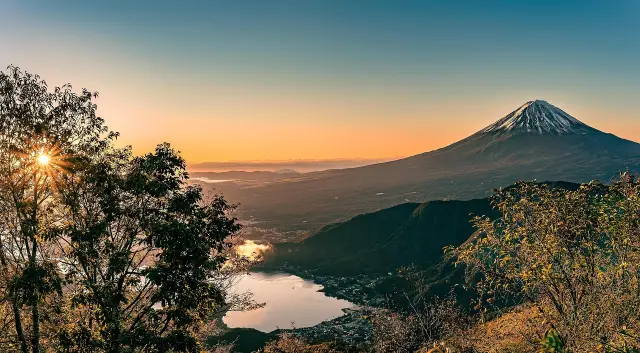
Motosu is the westernmost of the five lakes. Trains do not go there, so you need to take a bus or drive in. Choose based on where you are staying.
Photo: mutomasataka / Pixabay
Staying in Kawaguchiko: Take the Special Bus
Kawaguchiko Station is the hub of the Five Lakes area. During the festival, the Shibazakura Liner bus leaves from stop number 7 in front of the station and takes about 40 minutes to reach the festival entrance. The ticket counter in front of the station sells a combined ticket covering the round-trip bus and festival admission, so you buy it once and do not have to queue again at the entrance. This option suits people staying overnight in Kawaguchiko who want to get to the festival early.
Staying in Tokyo: Highway Bus from Shinjuku
If you do not want to change hotels, take a highway bus from Busta Shinjuku (4th floor of the building above Shinjuku Station). During the festival there are direct services to the festival, taking about 2 and a half hours without traffic. Tickets can be booked online in advance and the morning buses sell out fast, so book as soon as you know your travel date. Allow extra time for the return, because roads into Tokyo are often congested in the evening.
Drive Yourself, or Take a Private Car with Driver
If you hold an international driving permit under the 1949 Convention, you can rent a car from Tokyo or Kawaguchiko. Set your GPS to Fuji Motosuko Resort, which has a large parking lot (with a per-car parking fee). On holidays, the line of cars into the lot gets long from mid-morning. For families or older travelers, a private car with driver helps a lot, since you can go on to other lakes without checking bus timetables.
Filling a Day in the Fuji Area
Walking around the shibazakura festival actually takes about 1.5-2 hours, so you can easily spend the rest of the day visiting other lakes. A sample order we often use:
- Morning: Enter when the gates open, walk up to the hilltop viewpoint first, then come down for the photo-prop spots.
- Late morning: Stop by the north shore of Lake Motosu, the spot shown in the Fuji image on the old 1,000 yen note.
- Afternoon: Head back via Lake Saiko or Kawaguchiko, stroll the waterfront at Oishi Park or ride the Kachi Kachi Ropeway.
- Evening: Soak in the onsen at a lakeside ryokan. Rooms facing Fuji usually book up first, so reserve several months ahead for May.
What to See at the Festival
Photo: Ankur P / Wikimedia Commons (CC BY 2.0)
- Mini Fuji flower mound: A flower bed shaped like a small mountain that you can photograph together with the real Fuji behind it in a single frame.
- Photo-prop spots: A small boat set in the middle of the flower beds, a pink gate, and a picture frame angled so Fuji sits right in the center. The boat spot has the longest line, so go there first.
- Hilltop viewpoint: A short walk up for a panoramic view of the whole festival's flower beds.
- Peter Rabbit™ English garden: A cafe and souvenir shop area, great for small children.
- Food zone: Try the pink shibazakura-flavored soft-serve ice cream and Fujinomiya yakisoba, the chewy-noodle yakisoba of Shizuoka Prefecture on the other side of the mountain.
Budget to Prepare
- Adult admission (junior high school and up): About 1,000 - 1,300 yen. The price changes with how far the bloom has progressed, and it is highest at peak bloom.
- Children aged 3 and up: No more than about 700 yen.
- Transport: The combined bus ticket from Kawaguchiko is better value than buying separately. For buses from Shinjuku, check prices when booking online.
- Cash: Some small stalls in the food zone accept cash only, so carry coins and small bills. Suica cards work only at certain points.
Good to Know Before You Go
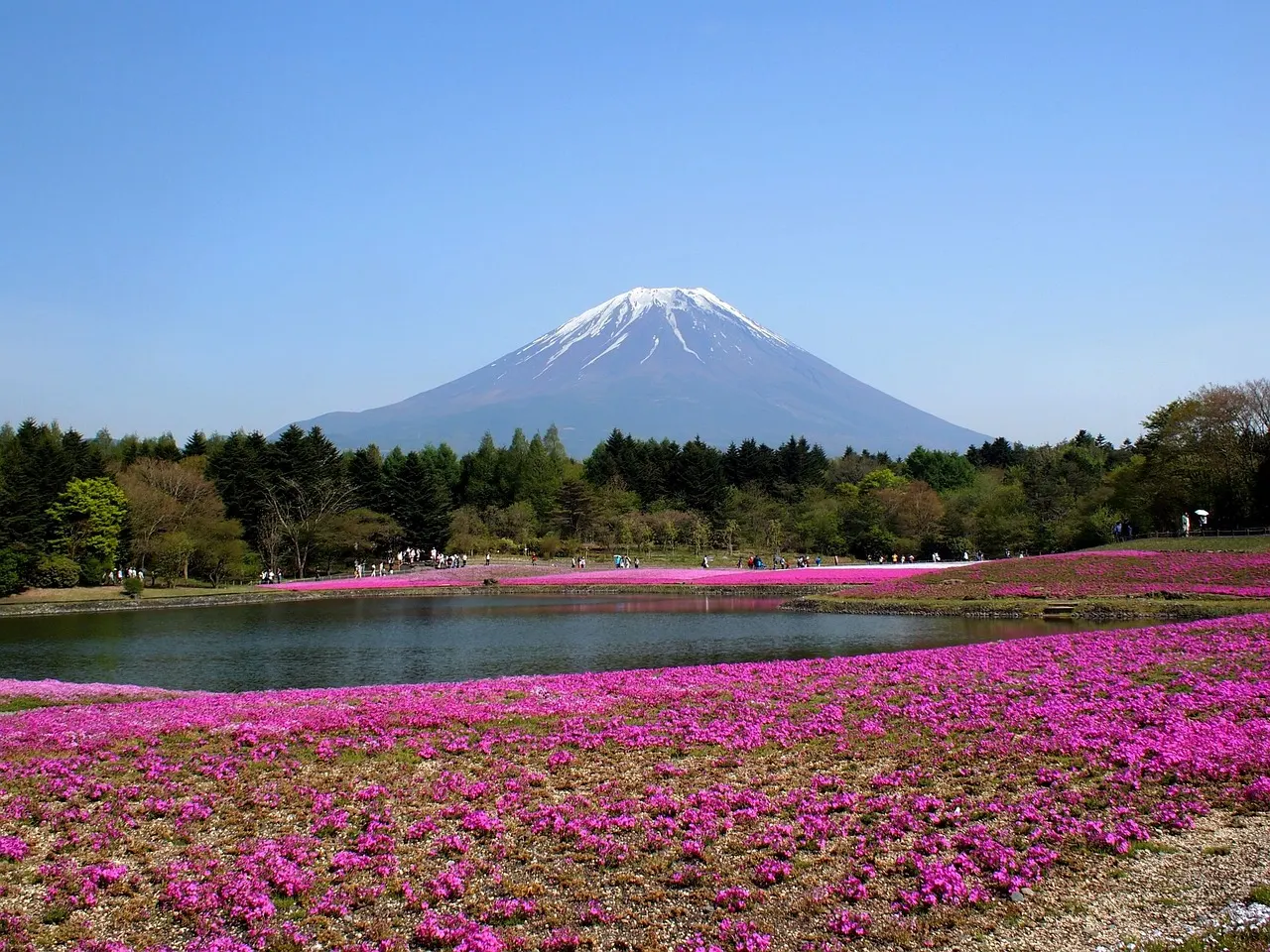
Photo: banyan0928 / Pixabay
- Noticeably colder than Tokyo: Up on the high ground by the lake, May mornings are still cool and windy. Bring a light windproof jacket and comfortable walking shoes, as the paths are on slopes.
- Check the live camera before leaving: The festival's official website has a Live Camera so you can see how far the flowers have bloomed and whether Fuji is visible. If the clouds are thick all morning, try swapping days with another plan in the same area.
- Etiquette in the flower beds: Do not step into the beds and do not pick the flowers. Most signs at the festival are in Japanese and English. If you see a rope barrier, treat it as no entry. Drones are not allowed in the festival grounds.
- Take your trash with you: Trash cans are scarce in Japan. The festival has sorted waste points, but if you cannot find one, put your trash in a bag and take it back to your hotel.
- Useful Japanese words: "Shibazakura Matsuri" (shibazakura festival) and "mankai" (full bloom). If you see this word on a sign or website, it means the peak has arrived.
A Private Fuji Trip with See You Again
If you want to get to the shibazakura festival early without worrying about bus tickets, or want to fit several lakes into one day, our team can arrange a private car with driver and plan the route around the bloom dates. See sample programs with Fuji on the route:
- The Charm of Fuji, from the Mountain to the Old Town, 4 Days 3 Nights (JPN033)
- Day Trip from Tokyo: Hakone, Fuji and Odawara Castle (JPN016)
- Tokyo and Fuji, 8 Days 7 Nights (JPN022)
Private tour prices depend on group size and travel dates. Ask for a quote through the chat on our website or contact us. For a faster reply, contact us on LINE at 004207289999999 or call 083 035 9755.
Cover photo: ThuanJapan / Pixabay
Planning it yourself?
What independent travellers usually book before they go, from providers that actually work

Partner links · we may earn a small commission when you book, your price stays the same