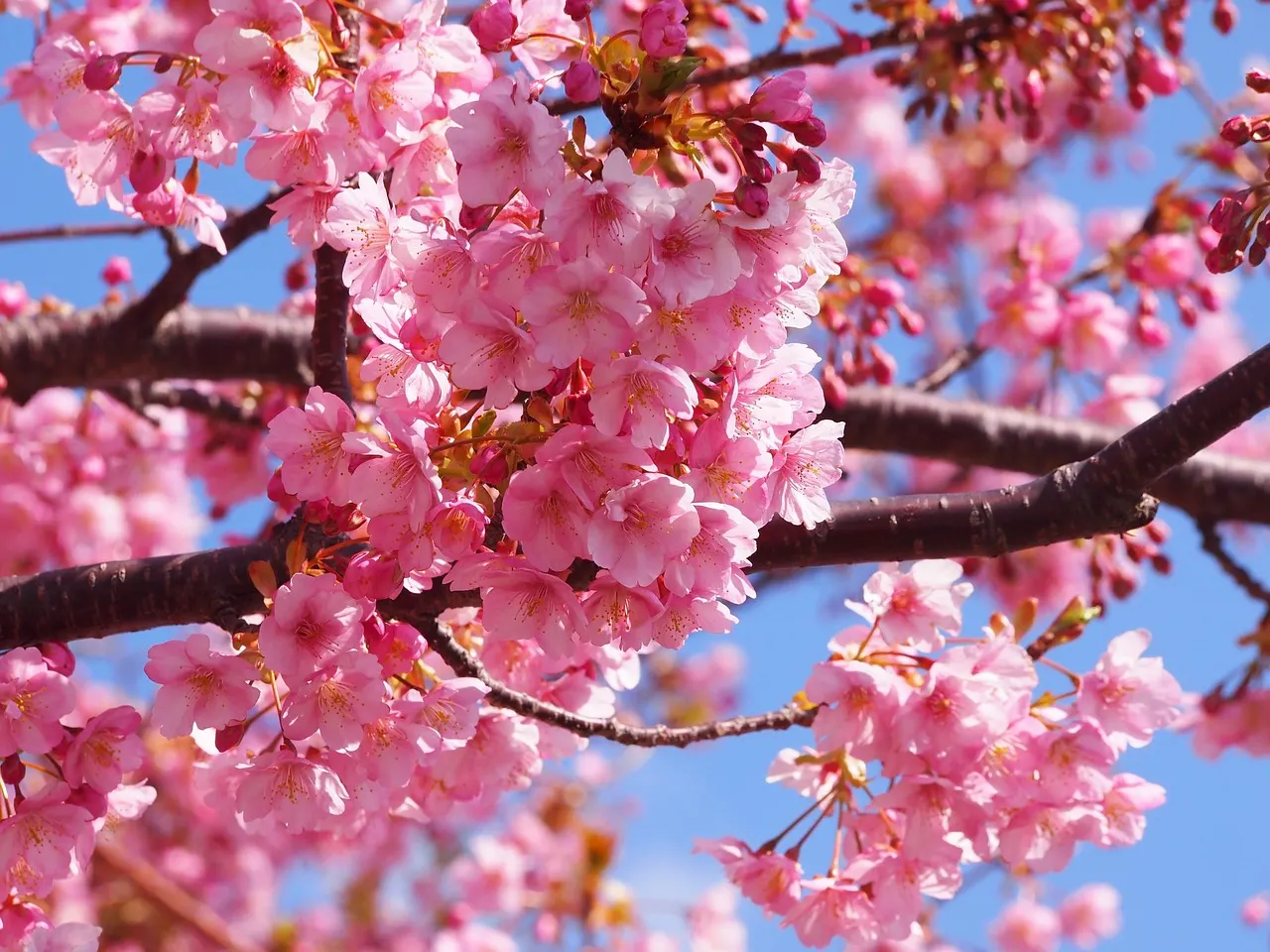
If you are going to see the Kawazu cherry blossoms, spending 1 night on the Izu Peninsula is far more relaxing than a day trip, because you can walk along the Kawazu River early in the morning before the first train from Tokyo arrives, soak in a seaside onsen, and avoid nearly 5 hours of train travel there and back in a single day. This article is the 2-day, 1-night plan we recommend to people visiting Japan in February.
How are Kawazu cherry blossoms different from Tokyo's?
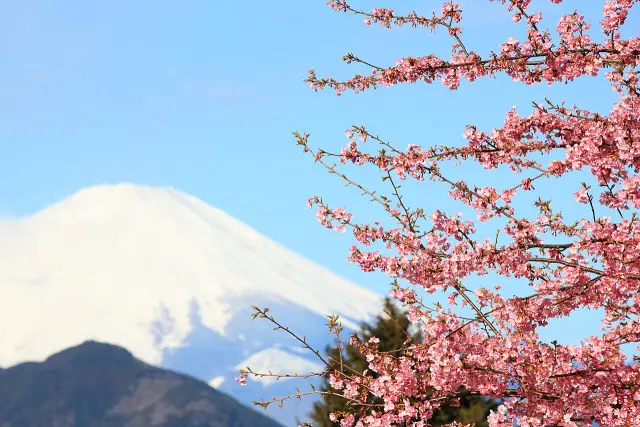
The sakura most Thais know from Tokyo is mainly Somei Yoshino, which blooms from late March to early April in a whitish pale pink. Kawazu-zakura, on the other hand, is a variety that arose naturally in the town of Kawazu. A local resident found a seedling by the river around 1955 and planted it at home, and that first tree still stands in the town today.
The clear differences are
- It blooms about a month and a half earlier than Somei Yoshino, usually starting in early February and reaching full bloom in the middle to end of the month
- Its pink is deeper, so the color does not wash out in photos against the winter sky
- The flowers open gradually and last about 3-4 weeks, instead of all falling within a few days like other varieties
In years when the cold lasts longer, blooming can be delayed until early March, while in warm years full bloom can arrive in the second week of February. Check the town of Kawazu's bloom reports about 2-3 weeks before booking your accommodation.
Day 1: leave Tokyo and reach Kawazu in the afternoon
Which train to take
The easiest way is the Odoriko limited express from Tokyo or Shinagawa station straight to Kawazu station with no changes, taking about two and a half hours. For more comfort, the Saphir Odoriko is an all-premium-seat train, but the fare is higher.
The other option is to take the Tokaido shinkansen to Atami first, then change to the JR Ito Line and the Izukyu line down the coast. This is slightly faster but means dragging your luggage between platforms. Holders of the JR TOKYO Wide Pass can use it on the Odoriko but not on the shinkansen between Tokyo and Atami, which is why many people choose to ride the Odoriko all the way.
During the festival, reserved seats on the Odoriko fill up fast, especially on weekends. Book as soon as you know your travel date.
Leave your luggage before you walk
Kawazu is a small station. During the festival there is a temporary luggage storage point near the station, but if you are carrying a large suitcase, the easier way is to send it ahead to your accommodation with a luggage delivery service (takkyubin) from your hotel in Tokyo and bring only a small overnight bag.
The first afternoon: walk the stretch near the sea first
The line of cherry trees along the Kawazu River runs for about 4 kilometers from the river mouth upstream. On the first afternoon, walk the stretch near the station and the sea first. This is where you find the most stalls and food vendors. Try the pink sakura-flavored taiyaki for about 200 yen, and the Izu oranges sold at the locals' stalls.
During the festival, the cherry trees along some stretches of the river are lit up in the evening. If you are staying in Kawazu itself or nearby, you can walk out to see them after dinner. If you are staying further away, in Shimoda or Ito, check the time of the last train carefully, because late-night Izukyu trains are far apart.
Choosing where to stay the first night: Kawazu, Shimoda or the Ito side
- Kawazu and Imaihama are closest to the river, so you can just wake up and walk. But there are few ryokan, they fill up quickly during the festival, and prices go up
- Shimoda is at the end of the Izukyu line, about 20 minutes from Kawazu by train. It has more places to stay and plenty of seafood restaurants, and suits you if you want to visit beaches or the port town on day two
- Atami, Ito or Atagawa are on the way back to Tokyo, which makes returning on day two easy. Atagawa and Higashi-Izu have many ryokan with baths overlooking the sea
Most ryokan include a kaiseki dinner and breakfast. A seafood dish you will often find in Izu is kinmedai (splendid alfonsino, a red big-eyed fish) simmered in soy sauce. If you cannot eat seafood or have food allergies, mention it when booking, because the kitchen has to prepare in advance. In shared onsen baths, wash before getting into the pool and ask the accommodation about tattoos beforehand. Some places have private baths you can book by time slot.
Day 2: a morning river walk, then choose your route back
Early morning on the Kawazu River
This is the main reason to stay overnight. Before about 9 a.m. there is hardly anyone by the river and no tour buses yet, and the morning light from the east makes the blossoms beautiful. Walk upstream, where the cherry trees are so close together they form a tunnel, with lines of yellow nanohana flowers underneath. If you keep walking, you will reach the original Kawazu-zakura mother tree in the Tanaka district, quite a way from the station. Allow about an hour and a half to walk there and back.
Option A: the Kawazu Nanadaru Seven Waterfalls
Take a bus from Kawazu station into the mountains for about 25 minutes. A trail follows the stream past 7 waterfalls large and small, with steps and bridges along the way, and takes about 1 hour to walk. On the way you will see the Kawazu Loop Bridge, where the road spirals around twice. This suits people who want to see the forested, mountainous side of Izu, not just the cherry blossoms.
Option B: head south to Minamiizu
At the same time, Minamiizu has another cherry blossom festival along the Aono River, much quieter than Kawazu. Take a bus from Shimoda station. If you like taking photos without crowds, this is worth it, and then come back to catch the train at Shimoda.
Option C: stop at Atami on the way back
If you do not want to walk much, take the train back and stop at Atami, stroll the shopping street in front of the station, eat grilled dried seafood, then take the shinkansen from Atami into Tokyo in under an hour. The whole day will not be too tiring.
Should you drive yourself or use a private car?
When the cherry blossoms are in full bloom, the road along Izu's east coast (Route 135) into Kawazu is heavily congested on holidays. What should take a few minutes can turn into an hour, and the town's temporary parking lots are full by mid-morning. If you plan to drive yourself, leave very early, or park in a neighboring town and take the train in for one stop.
For families with elderly members or young children, a car with driver helps a lot on day 2, because you can continue to the waterfalls, Shimoda and your accommodation without waiting for buses that run almost an hour apart. The driver will know drop-off points that avoid the line of cars heading into town.
Weather and what to bring
- February in Izu is slightly warmer than Tokyo because it is by the sea. Daytime temperatures are mostly in the low 10s Celsius, the mornings and evenings get much colder, and it is windy along the river and the beaches
- Wear layers you can take off, because you will get warm walking all day but cold standing on the platform
- Sneakers you can walk several kilometers in, especially if you visit the Seven Waterfalls, where the path is slippery in the rain
- Carry yen in cash, as many food stalls along the river do not take cards
- Suica or PASMO cards work on the JR Ito Line, but check which parts of the Izukyu line accept cards, because some stations still require a paper ticket
Quick summary schedule
- Day 1 morning: send your large suitcase to the accommodation, take the Odoriko from Tokyo
- Day 1 afternoon: walk the Kawazu River near the station and the sea, eat at the festival stalls
- Day 1 evening: check in to the ryokan, soak in the onsen, see the illuminated cherry trees if you are staying nearby
- Day 2 morning: walk the upstream stretch of the river before the crowds and visit the Kawazu-zakura mother tree
- Day 2 afternoon: choose the Seven Waterfalls, Minamiizu or a stop at Atami, then return to Tokyo
Want to travel Izu privately?
If you would like to combine Kawazu with Fuji, Hakone or Tokyo in one trip, we can arrange a private Japan trip with See You Again, with a car and driver, onsen accommodation and a schedule adjusted to when the flowers actually bloom. See sample routes at
- Japan private tour: Shizuoka, Izu, Tokyo, 5 days 4 nights (JPN048)
- Japan private tour: Tokyo and Hakone, 6 days 5 nights (JPN002)
Prices depend on travel dates, number of people and accommodation level. Ask for a price on LINE 004207289999999 or call 083 035 9755.
Planning it yourself?
What independent travellers usually book before they go, from providers that actually work

Partner links · we may earn a small commission when you book, your price stays the same