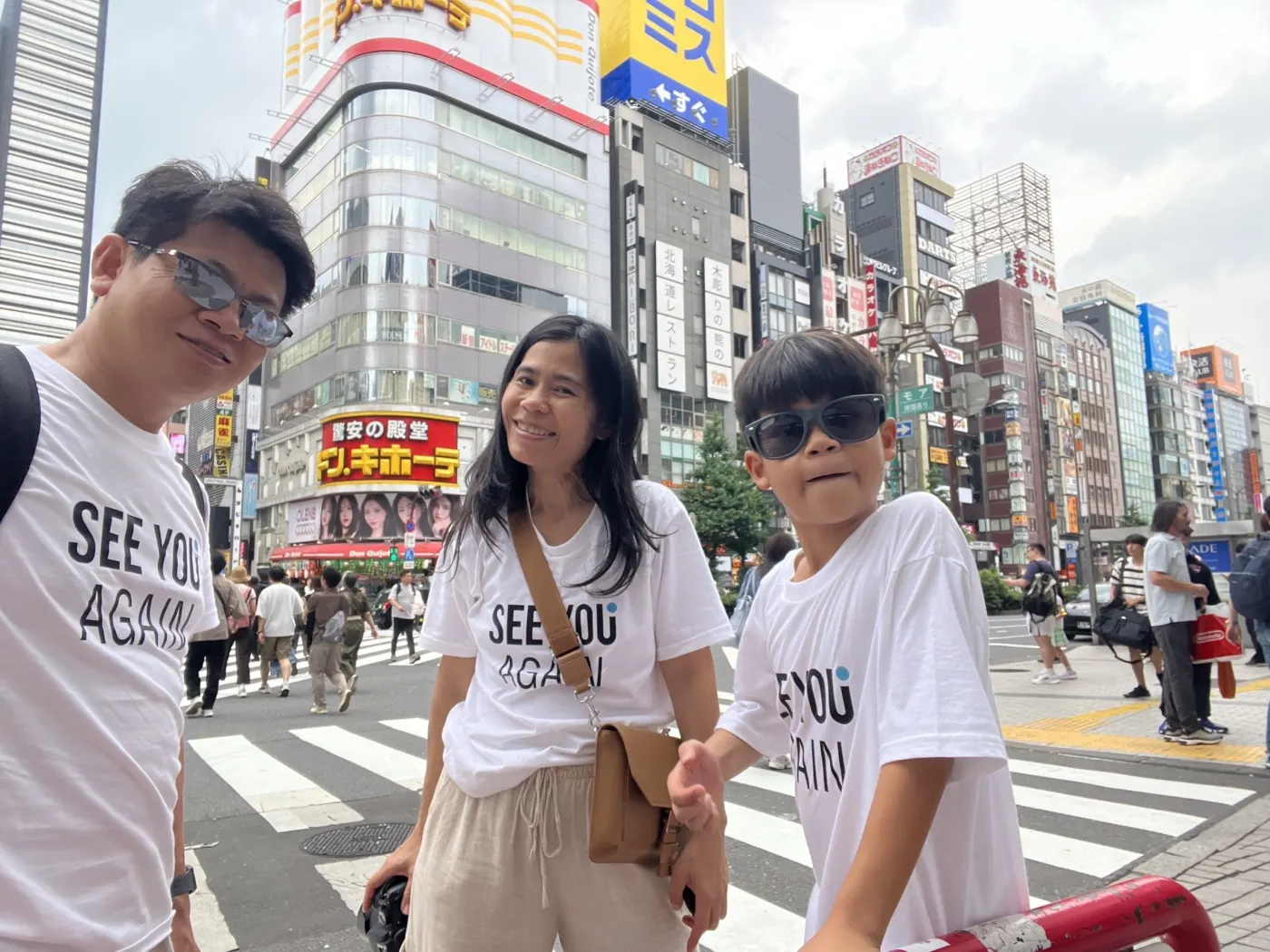
Want to see cherry blossoms in Japan but your time off is in February? Matsuda in Kanagawa Prefecture is the easiest answer: leave Shinjuku in the morning, reach the sakura hill before ten, and be back in Tokyo in time for dinner. This article lays out an hour-by-hour 1-day plan, along with the things Thai travelers often forget to prepare when visiting Japan in winter.
Why Matsuda blooms almost a month before Tokyo
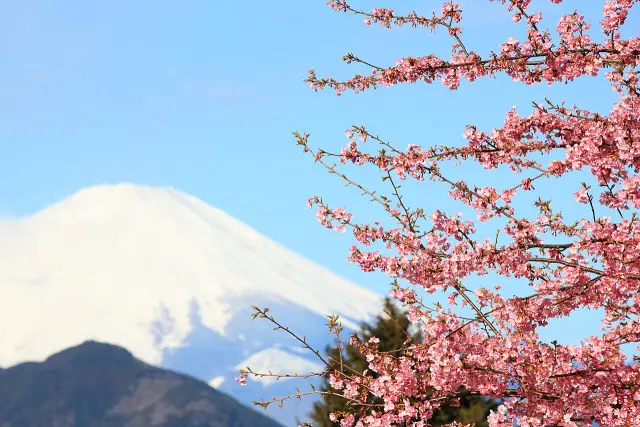
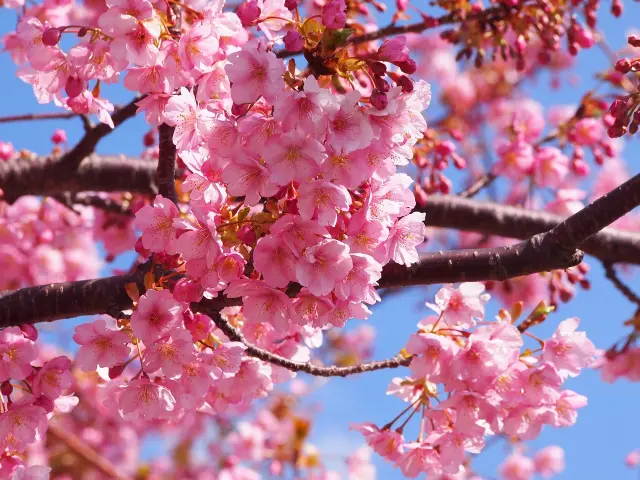
The cherry trees Thai travelers know from photos of Tokyo are mostly Somei Yoshino, pale pink to almost white, which in Tokyo usually bloom from late March to early April. The hill in Matsuda, however, is planted with Kawazu-zakura, which have larger, deeper-colored flowers and bloom much earlier. The best bloom is usually from around mid-February to early March.
Another advantage of going at this time is that it is still winter, with dry air and clear skies, so the chance of seeing Fuji's peak still white with snow is higher than in true spring, when there is often haze.
Check the blossoms before you go
- In warm years the flowers may bloom a week earlier; in years with a long cold spell they bloom later.
- The Matsuda town website and Japanese sakura forecast sites update the bloom status (starting, half bloom, full bloom) every few days during the festival.
- If you see 満開 (mankai), it means full bloom, the time to hurry over.
A 1-day Matsuda timetable, hour by hour
07:30 Leave Shinjuku
At Shinjuku there are two options. If you want a comfortable seat and no transfers, reserve a seat on the Odakyu Romancecar limited express toward Gotemba and get off right at Matsuda Station, a ride of a little over an hour. If you want to save money and stay flexible, tap your Suica or PASMO card and take an ordinary Odakyu Odawara Line express to Shin-Matsuda Station, which takes a little longer.
If you are staying near Tokyo Station or Shinagawa, take the JR Tokaido Line to Kozu Station, then change to the Gotemba Line for one stop to Matsuda. This suits travelers who already hold a JR Pass.
Note: Shin-Matsuda Station (Odakyu) and Matsuda Station (JR) are only a few minutes' walk apart, so don't be alarmed if the map shows different names.
09:00 Up the hill to Nishihirabatake Park
In front of the north side of JR Matsuda Station, special festival buses run up to the park entrance. The fare is about 180 yen for adults and 90 yen for children, with buses every half hour to an hour. If the queue is very long and your legs are up to it, you can walk up. It is not far, but steep all the way, so allow about twenty minutes.
Park admission during the festival is about 300 yen for adults and 100 yen for children, with free entry for small children. Bring coins or small notes, because some small stalls on the hill still accept only cash.
09:30-11:30 Stroll among the blossoms and wait for Fuji
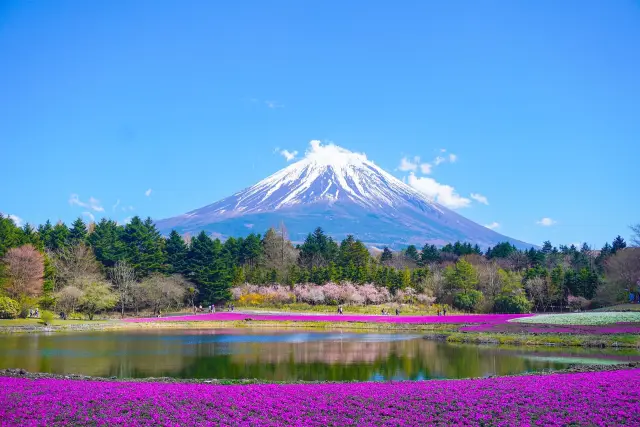
The morning is the golden hour here: clouds have not formed yet, and Fuji's peak usually appears clearly to the west. The shot everyone is after has a row of deep pink sakura in front, a yellow nanohana field in the middle and Fuji behind. Walk up to the highest viewpoint in the park for a picture that takes in the whole Ashigara plain too.
- The wooden swing at the viewpoint has the longest queue; lining up before ten means a much shorter wait.
- The long roller slide down the hill is fun for kids and brave adults. It is closed for maintenance on some days, so check the signs on site.
- Families with small children or elderly travelers can ride the mini train around the park instead of walking up and down the hill.
11:30 A picnic lunch
The hill has food and snack stalls, such as sakura-flavored soft-serve and Matsuda oranges, but there is little choice of main dishes. Japanese visitors like to buy bento or onigiri from the convenience store in front of the station and eat them under the cherry trees. We recommend the same, and bring a small picnic mat too.
13:00 Choose where to go in the afternoon
Matsuda takes exactly half a day. For the rest of the afternoon, choose by style:
- For shoppers: take the JR Gotemba Line on to Gotemba Premium Outlets, about half an hour, where you can see Fuji from another angle.
- For onsen lovers: head back toward Odawara, see Odawara Castle and continue up to Hakone for a hot spring soak before returning.
- For a relaxed day: return to Tokyo early to avoid the crowded evening rush-hour trains.
Evening, if you want to see illuminated sakura
During parts of the festival, the cherry trees are lit up in the early evening, with views of the city lights on the plain below. If you plan to stay for it, check the dates first and bring an extra warm layer, because it gets cold very quickly on the hill after sunset.
What to wear for cherry blossoms in February
The word sakura makes many people think of mild weather, but February in Kanagawa is still winter. Mornings can be very cold and the wind on the hill is strong.
- Wear several layers, thin inside and windproof outside, that you can take off when you warm up walking uphill.
- Sneakers with good grip, as the park paths are dirt slopes and steps.
- Thin gloves for holding your phone while taking photos, and kairo heat packs, sold at every convenience store.
- Sunglasses and sunscreen, because the winter sun in the hills is stronger than you think.
Hanami etiquette to know
Japanese people take caring for cherry trees and public spaces seriously. Follow these and you won't stand out:
- Don't shake, pull or break branches for photos, and don't climb into the nanohana fields.
- Carry all your trash back down. There are almost no bins in the park; in Japan you bring your own bag.
- Queue for photo spots in turn, and step aside quickly for the next person when you are done.
- For large tripods and drones, check the signs first; many spots ban them when it is crowded.
The budget for a Matsuda trip
The only fixed costs on the hill are the park admission of 300 yen (children 100 yen) and the hill bus at 180 yen (children 90 yen) per ride. The rest is the round-trip train fare from Tokyo, which depends on whether you choose a reserved-seat limited express or an ordinary express, plus food and souvenirs. We recommend topping up your Suica or PASMO card with enough at Shinjuku so you don't have to look for a top-up machine at a small station.
Things to know before you go
- Weekends at full bloom are very crowded, so go on a weekday if you can.
- Most signs in the park are in Japanese, so keep a camera translation app open to help you read them.
- If it is cloudy that day, Fuji may not appear at all, so keep a spare day in your Tokyo plan.
- Toilets on the hill are limited, so use the station toilets before boarding the bus.
Want to go without changing trains yourself?
For families with elderly travelers, or if you want to combine Matsuda with Fuji, Hakone and Tokyo in one trip, traveling Japan privately with See You Again lets us arrange the route and the car to match the bloom. See sample programs here:
- Private Japan tour: Tokyo and Fuji 4 days 3 nights (JPN043)
- Private Japan tour: Tokyo and Fuji experience 8 days 7 nights (JPN022)
Prices depend on your travel dates and group size. Ask about prices and availability in the website chat, or on LINE 004207289999999, or call 083 035 9755.
Planning it yourself?
What independent travellers usually book before they go, from providers that actually work

Partner links · we may earn a small commission when you book, your price stays the same