If all you see in Nara is the deer park and Todaiji, you haven't seen even half of Nara. The western and southwestern parts of the city are home to some of Japan's earliest temples, which are spread quite far apart, so fitting them into one day means planning the order carefully, or taking a sightseeing bus that loops around them all in one go.
Why Western Nara Is Worth a Visit
Nara was Japan's capital in the 8th century, in what's known as the Nara period, when Buddhism, art and carpentry flowed in from China and the Korean Peninsula. The temples that survive from that era are scattered outside the old city center and are inscribed as two separate World Heritage sites.
- Buddhist Monuments in the Horyu-ji Area, one of Japan's very first World Heritage sites
- Historic Monuments of Ancient Nara, which include Yakushiji, Toshodaiji and Heijo Palace
Another plus is that there are far fewer people than in the deer park area, so you can take your time and get photos without jostling for an angle. It's ideal for anyone who has been to Nara before and wants to see a deeper side.
Recommended Route: From South to North
Horyuji is the farthest away, so make it your first stop in the late morning, then work your way back north toward the city. This order brings you back to Nara Station right around evening.
Late Morning: Horyuji and Chuguji
The Horyuji grounds are very large, with the western compound, home to the five-story pagoda and the Kondo main hall, and the eastern compound with the octagonal Yumedono hall. The wooden buildings here are considered the oldest surviving group of wooden buildings in the world. Allow at least an hour and a half.
A short walk to the east is Chuguji, a small nunnery connected with Prince Shotoku, a key patron of Buddhism in Japan. What people come to see is a wooden bodhisattva seated in a pensive pose, its face so gentle that many visitors end up gazing at it longer than they intended.
Lunch: Nara-Style Iron-Pot Rice
The lunch that suits this day is kamameshi, rice cooked with broth and toppings in a small individual iron pot, brought to the table piping hot in the pot. The rice stuck to the bottom turns crisp and fragrant, and Japanese diners consider it the tastiest part. Restaurants around here are usually open at lunchtime and have long lines on holidays, so if you're a group, book ahead.
Early Afternoon: A Peaceful Break at Jikoin
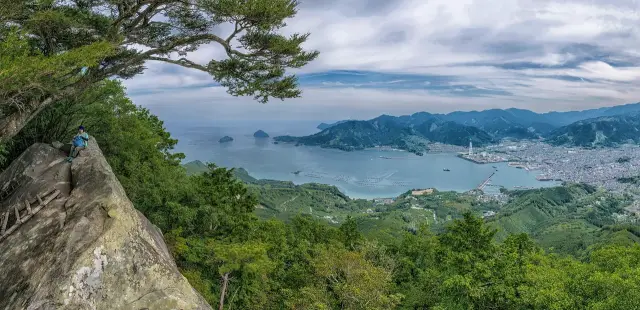
Jikoin is a small hilltop temple founded in the Edo period and tied to one of the schools of the tea ceremony. Its highlight is a sitting room that opens onto a garden of clipped shrubs, with distant views of the hills around the Nara plain. Visitors are served matcha with seasonal wagashi sweets, a lovely break after a morning on your feet.
Late Afternoon: Nishinokyo, Yakushiji and Toshodaiji
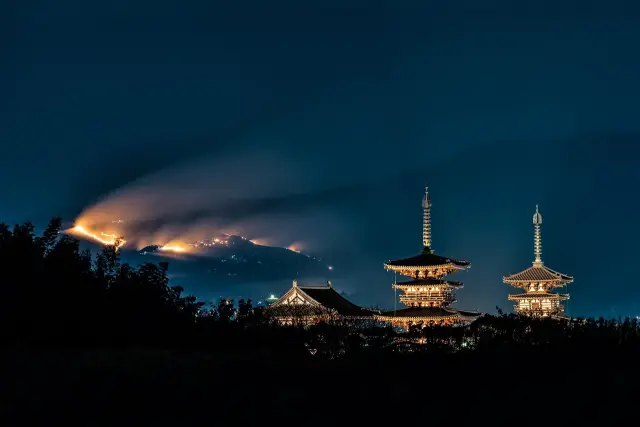
These two temples are close together in the Nishinokyo area, about a 10-minute walk apart. Yakushiji has twin East and West pagodas. The East Pagoda is an original from the Nara period that finished a major restoration just a few years ago, while the West Pagoda was rebuilt to the original design. Standing and looking at them side by side, you can clearly see the difference in the color of the wood.
Toshodaiji was built by Jianzhen (known in Japan as Ganjin), a Chinese monk who tried several times to cross the sea to Japan and went blind before finally succeeding. The main hall has a row of large wooden pillars across the front in true Nara-period style, and the atmosphere is quieter and more peaceful than at Yakushiji.
Evening: Pass Heijo Palace Before Heading into Town
On the way back you'll pass the vast grounds of Heijo Palace, the site of the palace of the former capital Heijo-kyo. Today it has reconstructions of the Suzakumon Gate and the Daigokuden audience hall, which help you picture the scale of the ancient capital. Then head into town and finish at JR Nara or Kintetsu Nara Station.
Travel on Your Own or Take a Sightseeing Bus
You can go on your own, but it takes several connections. Here's a rough summary.
- Horyuji: Take the JR Yamatoji Line from JR Nara Station to Horyuji Station, then a bus or a walk of about 20 minutes
- Yakushiji and Toshodaiji: Take the Kintetsu Kashihara Line and get off at Nishinokyo Station
- Jikoin: Located in between and not very convenient by public transport, so you usually need a taxi
- Heijo Palace: Close to Kintetsu Yamato-Saidaiji Station
Traveling on your own, most people manage only two or three stops, so a loop sightseeing bus or private car is better value if you want to see everything in one day, especially for older travelers or families with children.
When to Go
- Late March to early April Cherry blossoms bloom around the pagodas, but crowds grow
- Mid-November to early December The autumn leaves in the Jikoin garden and around Horyuji are stunning
- Summer Hot and humid, with almost no shade in the temple grounds, so bring water, a hat and an umbrella
- Winter The quietest time, with biting winds across the open grounds, but the clearest shots for photos
What to Know at Japanese Temples
- Some buildings require you to remove your shoes, so wear clean socks and shoes that are easy to slip on and off
- Photography is prohibited in most buildings housing Buddha images, so always check the signs first
- Each temple charges its own admission, so carry cash in coins and small notes, since some places don't take cards
- When you're served matcha at Jikoin, turn the bowl slightly before drinking as etiquette requires, and eat the sweet before drinking the tea
- Most temples close around 16.30-17.00, so don't schedule your last stop too late
Round Out Your Kansai Trip
This day fits well with a stay in Kyoto or Osaka, as Nara is less than an hour from both cities by train. If you'd like to explore Nara privately with See You Again, with a car and driver to take you to places that are hard to reach on your own, take a look at this program.
- Japan private tour JPN046, Nara and rural Japanese life, 7 days 6 nights
- Review: one day in Nara, 3 World Heritage temples
Want to adjust the route or ask about prices? Message us via chat or on LINE 004207289999999.
Planning it yourself?
What independent travellers usually book before they go, from providers that actually work

Partner links · we may earn a small commission when you book, your price stays the same